Introduction to Roof Cleaning
Your roof is more than just a protective barrier against the elements; it plays a vital role in the overall aesthetic appeal and safety of your home. Roof Cleaning becomes essential when accumulated dirt, algae, moss, and other contaminants start to take a toll on its structure and appearance. Maintaining a clean roof not only extends its lifespan but also enhances the value of your property. In this comprehensive guide, we’ll explore the importance of roof cleaning, various cleaning methods, benefits, cost considerations, and frequently asked questions related to this crucial home maintenance task.
Why Roof Cleaning is Essential
Roof cleaning is not just a matter of aesthetics; it is crucial for the longevity and integrity of your roofing materials. Dirt, moss, algae, and lichen can trap moisture against the roof’s surface, promoting decay and leading to significant damage over time. Regular cleaning helps prevent these issues.
Moreover, a clean roof can improve your home's energy efficiency. A roof covered in dark stains can absorb heat, increasing cooling costs during the summer months. By maintaining a clean surface, you ensure better thermal regulation within your home.
Common Roof Contaminants
Understanding what contaminates your roof is key to deciding the best cleaning method. Here are the most common culprits:
- Algae: Often appearing as dark streaks, algae thrives in warm and humid conditions. It feeds on organic materials in the roof and can lead to premature aging of roofing materials.
- Moss: This growth holds moisture against the roof, which can lead to wood rot and leaks. Moss loves shady areas and can be particularly troublesome in wooded lots.
- Lichen: A combination of algae and fungi, lichen can attach firmly to roofing materials and is extremely difficult to remove without the right techniques.
- Dirt and debris: Leaves, branches, and other organic materials can accumulate on the roof, leading to clogging of the gutters and creating a breeding ground for mold and insects.
Signs Your Roof Needs Cleaning
Being proactive about roof maintenance can save you from costly repairs down the line. Here are some signs that indicate it might be time to clean your roof:
- Visible black streaks or discoloration.
- Moss or lichen growth, especially in shaded areas.
- Accumulation of debris, such as leaves or twigs.
- Increased energy bills due to heat absorption.
- Water damage inside your home—this could indicate leaks caused by roof damage.
Types of Roof Cleaning Methods
Low-Pressure Soft Washing
Soft washing is one of the safest and most effective roof cleaning methods. It involves the use of low-pressure water combined with a biodegradable cleaning solution to remove mildew, dirt, and other contaminants without damaging the shingles.
This technique is particularly effective for delicate roofing materials, such as asphalt shingles, which can be compromised by high-pressure washing. Soft washing ensures that the roof is cleaned thoroughly while preserving its integrity and extending its lifespan.
High-Pressure Washing
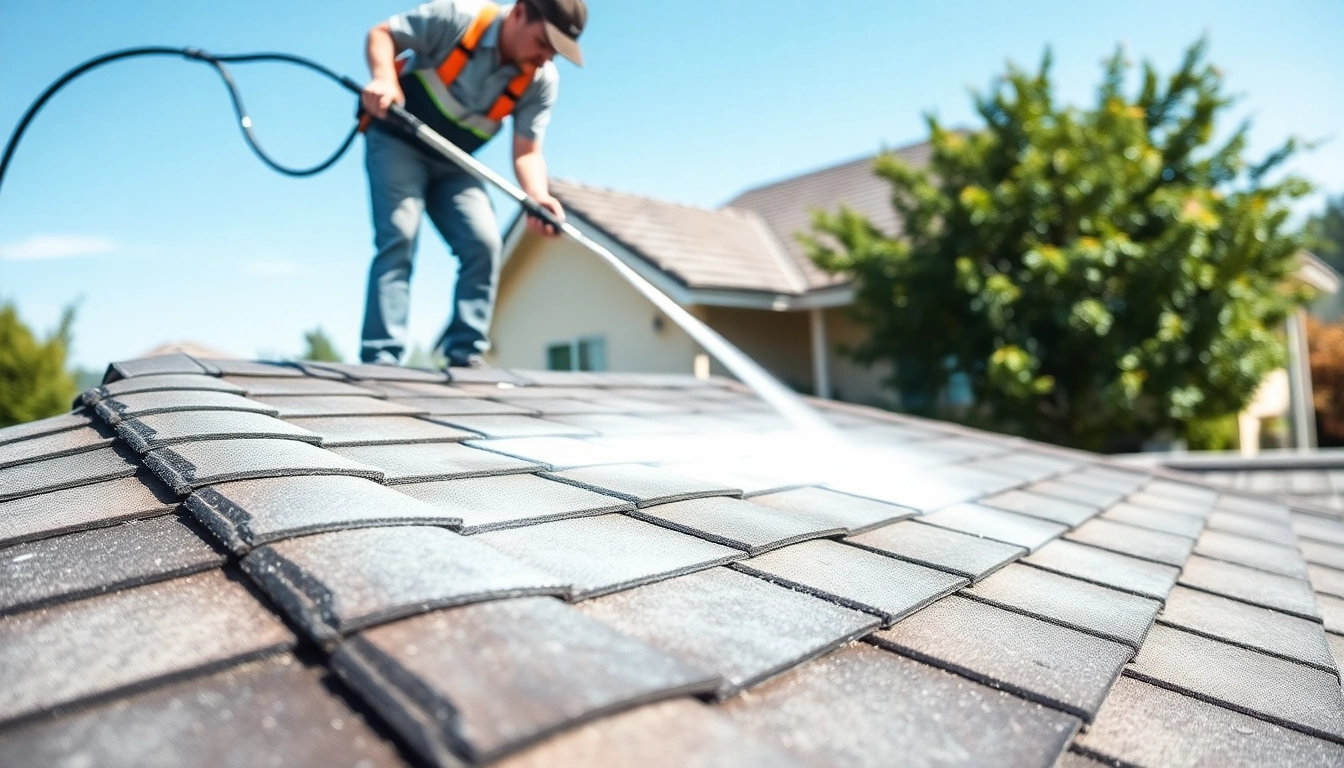
While high-pressure washing can be effective for hard surfaces, it is generally not recommended for roofs. The intense pressure can damage shingles, dislodge granules, and potentially cause leaks. This method may only be applied in specific circumstances, preferably by professionals trained in its use on roofing systems.
As a general rule, avoid this method unless absolutely necessary and consult with roof cleaning experts for advice.
Chemical Treatments
Chemical treatments can be particularly effective against stubborn growths like algae and moss. Commonly used chemicals include sodium hypochlorite and other biodegradable formulations that kill the organisms without harming the underlying roofing materials. The application should be handled by professionals who understand the balance of effective cleaning versus roof safety.
It’s important to follow proper procedures during application to avoid damaging surrounding plants or landscaping.
The Benefits of Regular Roof Cleaning
Longevity of Roof Materials
Regular roof cleaning can significantly extend the lifespan of your roofing materials. When dirt and organic growth are left unattended, they can contribute to deterioration and damage that may lead to premature replacement of roofing materials. A clean roof can last significantly longer, adding years to its expected lifespan and proving more cost-effective in the long run.
Enhancing Curb Appeal
A clean roof greatly enhances the overall look of your property. It adds to the curb appeal, which is essential if you're considering selling your home in the future. An attractive roof creates a positive first impression and can increase your home’s market value, drawing in potential buyers.
Preventing Structural Damage
Neglecting roof maintenance can lead to severe structural issues down the line. Accumulated debris and contaminants can cause water pooling, leading to leaks, which can spread to other areas of your home. By regularly maintaining a clean roof, you can prevent such costly damages and ensure the structural integrity of your property.
Cost Considerations for Roof Cleaning
Average Pricing Estimates
The cost of roof cleaning can vary based on several factors, including the size of your roof, the type of cleaning method used, and the level of contamination. On average, homeowners can expect to pay anywhere from $200 to $600 for professional roof cleaning services.
For larger or more complex roofs, costs may increase. Always obtain multiple quotes from reputable service providers to ensure you’re getting fair pricing.
Factors Influencing Costs
Several factors can influence the cost of roof cleaning, including:
- The size and slope of the roof.
- The type of roofing material and its condition.
- The extent of contamination and the cleaning method required.
- The geographical location and average market rates for service providers in your area.
Comparing DIY vs Professional Services
While DIY roof cleaning is an option, it often comes with risks. Professionals have the right equipment and expertise to perform the task safely and effectively. Attempting to clean your roof without the necessary knowledge can lead to personal injury or damage to your roof. Thus, the investment in professional service often pays off in terms of safety and quality of work.
Frequently Asked Questions
How often should I clean my roof?
Most experts recommend cleaning your roof every 1-3 years, though more frequent cleans may be necessary in certain climates.
Can I clean my roof myself?
While it's possible, hiring professionals is safer and ensures a more thorough cleaning, reducing the risk of damage.
What are the risks of not cleaning my roof?
Neglect can lead to structural damage, reduced lifespan, and costly repairs from leaks or growth-related issues.
What are the benefits of soft washing?
Soft washing effectively removes grime and algae without damaging shingles, maintaining the roof's integrity and appearance.
Are chemical treatments safe for my roof?
When applied correctly, chemical treatments are safe and effective for eliminating stubborn growths without harming your roof.